Why Night HDR Is More Challenging Than Daytime HDR
High Dynamic Range (HDR) imaging has become a standard feature in modern cameras, from smartphones to automotive and surveillance systems. While daytime HDR is already a complex task, nighttime HDR introduces a completely different level of difficulty. The same techniques that work well in daylight often struggle—or fail outright—once the sun goes down.
In this article, we’ll explore why night HDR is fundamentally more challenging than daytime HDR, from sensor physics to algorithmic trade-offs, and what this means for real-world imaging systems.
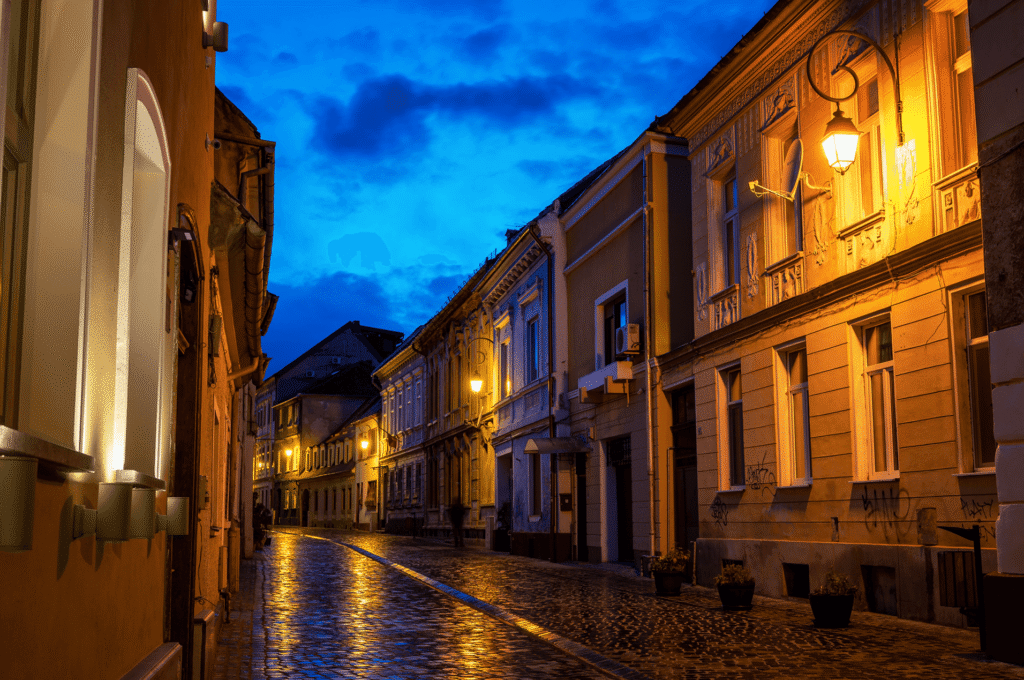
The Nature of the Scene: Extreme Contrast in the Dark
Daytime HDR scenes usually involve moderate, continuous illumination:
- Bright sky vs. shaded ground
- Sunlit objects vs. soft shadows
At night, illumination becomes sparse and artificial:
- Very bright point light sources (streetlamps, headlights, LEDs)
- Large areas with almost no light at all
This creates much higher local contrast ratios than during the day. A single pixel may need to represent:
- A headlight at near sensor saturation
- A shadow region barely above the noise level
Capturing both accurately in one HDR image is significantly harder.
Noise Dominates in Nighttime Imaging
In daylight HDR, most pixels operate well above the sensor’s noise floor. At night, however:
- Short exposures underexpose dark regions
- Long exposures amplify sensor noise
- High ISO introduces visible grain and color noise
When HDR merges multiple exposures at night, noise differences between frames become extreme. This leads to:
- Noisy shadows after tone mapping
- Color shifts in dark areas
- Temporal flicker in video HDR
In practice, night HDR is as much a denoising problem as it is a dynamic range problem.
Motion and Misalignment Are More Harmful at Night
HDR relies on combining multiple exposures. Any motion between frames can cause artifacts:
- Ghosting
- Double edges
- Smearing
At night, this problem is amplified because:
- Longer exposures are needed
- Moving objects (cars, people) are often illuminated only briefly
- Small misalignments are more visible in dark regions
Daytime HDR algorithms can often hide minor errors in well-lit textures. At night, there is less visual information to mask mistakes, making artifacts more noticeable.


Bright Light Sources Easily Break HDR Pipelines
Night scenes contain many high-intensity point light sources, which introduce challenges such as:
- Sensor saturation
- Blooming and flare
- Clipped color channels
In HDR fusion, these lights can:
- Create halos after tone mapping
- Bleed into surrounding dark areas
- Cause unstable exposure weighting
Unlike daylight highlights (e.g., clouds), night lights are small, sharp, and unforgiving. Preserving their shape and color while lifting shadows is extremely difficult.
Tone Mapping Becomes a Delicate Balancing Act
Tone mapping converts HDR data into a displayable image. At night:
- Aggressive shadow lifting reveals noise
- Compressing highlights can dull light sources
- Global tone curves often fail due to local contrast extremes
A good night HDR pipeline typically requires:
- Local tone mapping
- Content-aware contrast control
- Separate handling of light sources and backgrounds
This is far more complex than daytime HDR, where global operators often suffice.
Color Fidelity Is Harder in Low Light
In daylight, color information is rich and stable. At night:
- Color channels may be dominated by noise
- Artificial lighting skews color balance
- Different exposures may have inconsistent color responses
HDR fusion can amplify these issues, resulting in:
- Washed-out colors
- Unnatural skin tones
- Flickering chroma in video
Maintaining natural-looking color under extreme low-light HDR is one of the toughest challenges in imaging.
Real-Time Constraints Make It Even Tougher
For embedded and real-time systems (automotive, security, mobile):
- Processing budgets are limited
- Latency must stay low
- Power consumption matters
Night HDR often requires:
- More frames
- More sophisticated noise reduction
- Smarter motion handling
Balancing image quality, robustness, and real-time performance is significantly harder at night than during the day.
Conclusion: Night HDR Raises the Bar for Imaging Systems
While daytime HDR focuses on balancing sunlight and shadows, night HDR must operate under fundamentally tougher conditions:
- Low signal levels
- High noise
- Extreme contrast
- Unstable illumination
These factors push HDR pipelines into a more demanding operating regime. Techniques that work well in daylight must be carefully adapted and tuned to remain robust when light levels drop and noise increases. Success in night HDR depends on how effectively exposure control, noise management, motion handling, and tone mapping are balanced within the same overall framework.
In short:
Daytime HDR is about extending dynamic range.
Night HDR is about preserving usable information under stress.
As imaging systems continue to evolve, mastering night HDR will remain one of the key differentiators between good cameras—and truly great ones.
Looking for the right HDR solution for your device? Let’s talk.
Keywords: Night HDR, Nighttime HDR imaging, Low-light HDR, HDR imaging challenges, High Dynamic Range at night, Embedded HDR imaging, Real-time HDR processing